About Paver Block Vibrating Table
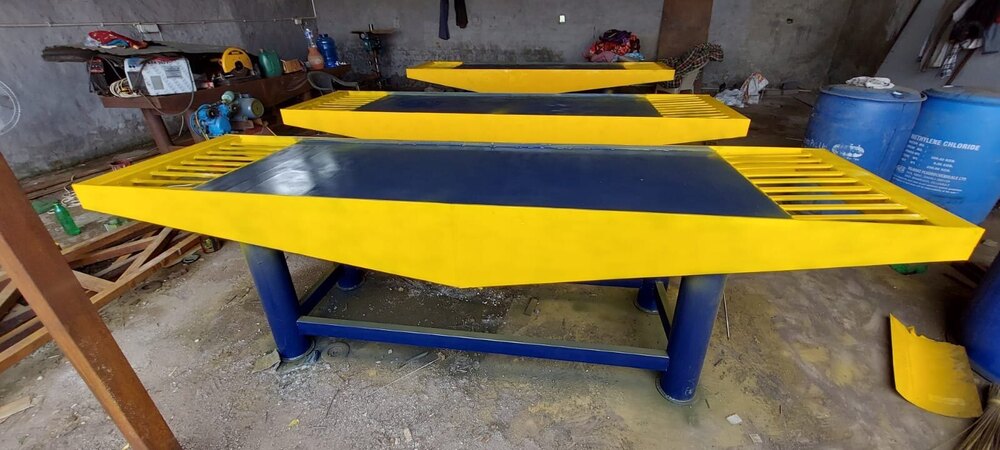
The Paver Block Vibrating Table ensures uniform compaction and surface finishing of concrete paver blocks. By using high-frequency vibration, it enhances block density, strength, and durability while maintaining precise dimensions. Commonly used in paver block manufacturing units, landscaping, road construction, and decorative pavement projects, it accelerates production and ensures consistent quality. Its robust design, low-maintenance motors, and adjustable vibration settings cater to varied block sizes. Ideal for industrial units and small workshops, it improves efficiency, reduces breakage, and produces aesthetically flawless pavers. The table is an essential companion for enterprises focused on durable, high-quality, and visually appealing concrete blocks.
Optimized for High-Volume ProductionWith its high vibration frequency and 2 HP motor, this vibrating table significantly increases the efficiency of paver, mosaic tile, and cement brick manufacturing. Capable of handling up to 1800 blocks in an 8-hour period, it is ideal for both large-scale and midsize production lines.
Superior Build Quality and StabilityConstructed from reinforced mild steel and finished with powder coating or enamel paint, the table ensures long-lasting durability. Its heavy-duty legs, fitted with anti-vibration pads, maintain structural integrity and reduce operational noise even at maximum load.
Precise Control and User-Friendly OperationThe integrated manual On/Off switch and vibration intensity control allow operators to easily adjust the table's settings to suit different material densities and mould sizes. This ensures optimal compaction and quality of finished products every cycle.
FAQ's of Paver Block Vibrating Table:
Q: How does the Paver Block Vibrating Table improve concrete compaction?
A: The table utilizes high-frequency vibrations (3000-5000 cycles/min) to evenly distribute and settle concrete in moulds, eliminating air voids and enhancing the density and finish quality of paver blocks, tiles, and bricks.
Q: What types of moulds can be used with this vibrating table?
A: It is compatible with all standard paver, tile, and block moulds commonly used in industrial settings, making it versatile for various concrete product manufacturing applications.
Q: When should the vibration intensity be adjusted?
A: Vibration intensity should be modified based on the type of material and mould size used, ensuring optimal compaction and surface finish for different products.
Q: Where is the Paver Block Vibrating Table typically installed?
A: This equipment is designed for use in manufacturing plants and workshops across India, particularly where high-volume paver, tile, or cement brick output is required.
Q: What is the process for using the vibrating table?
A: Place filled moulds on the table, power on using the manual switch, and set the required vibration level. Allow the table to run for the recommended duration for uniform concrete settlement before removing the compacted moulds.
Q: What are the key benefits of using this vibrating table?
A: Key benefits include improved product density, enhanced surface finishing, increased block strength, higher production rates, and reduced manual labor for compaction.
Q: Is the noise level manageable during operation?
A: Yes, with a noise level of around 80 dB and anti-vibration pads, the table minimizes operational noise and vibration transfer, resulting in a safer and more comfortable work environment.



 Send Inquiry

 Send Inquiry
 Send Inquiry
 Send SMS